Recurrent matter / a native 3D experiment

A score that changes its instrument

Four interacting rhythms run inside every voxel. Their activity writes persistent material. That material changes how the next rhythms communicate.

256 × 256 × 256material voxels in the photograph8 channelsof internal recurrent state per voxelTwo constitutionsmeeting in one shared medium
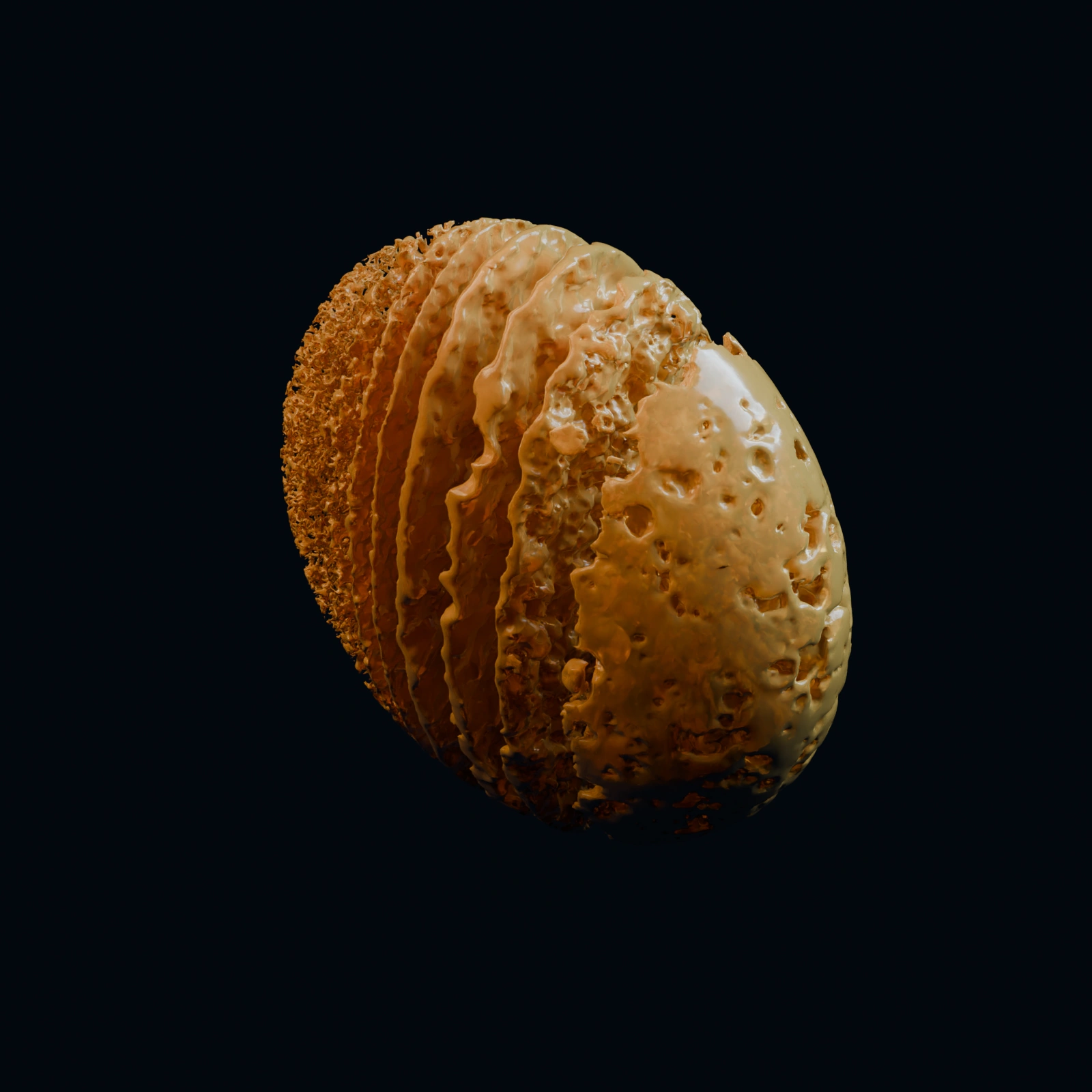
Amber colored perforated sheets and fine folds inside a cut ellipsoidal section of recurrent material
A photograph of the recorded fast-activity contour at time 60, from a native 256³ simulation. The amber optics and ellipsoidal viewing cut are chosen display treatments. Every fold comes from the actual three-dimensional scalar field; the surface is an activity contour, rather than a simulated mineral boundary.

Watch the material change its rhythm

The moving slices below show the same law in a 128³ domain. Wave bands form, migrate and reorganize. Slow material memory changes their later activity; the two sides retain different recurrent constitutions.
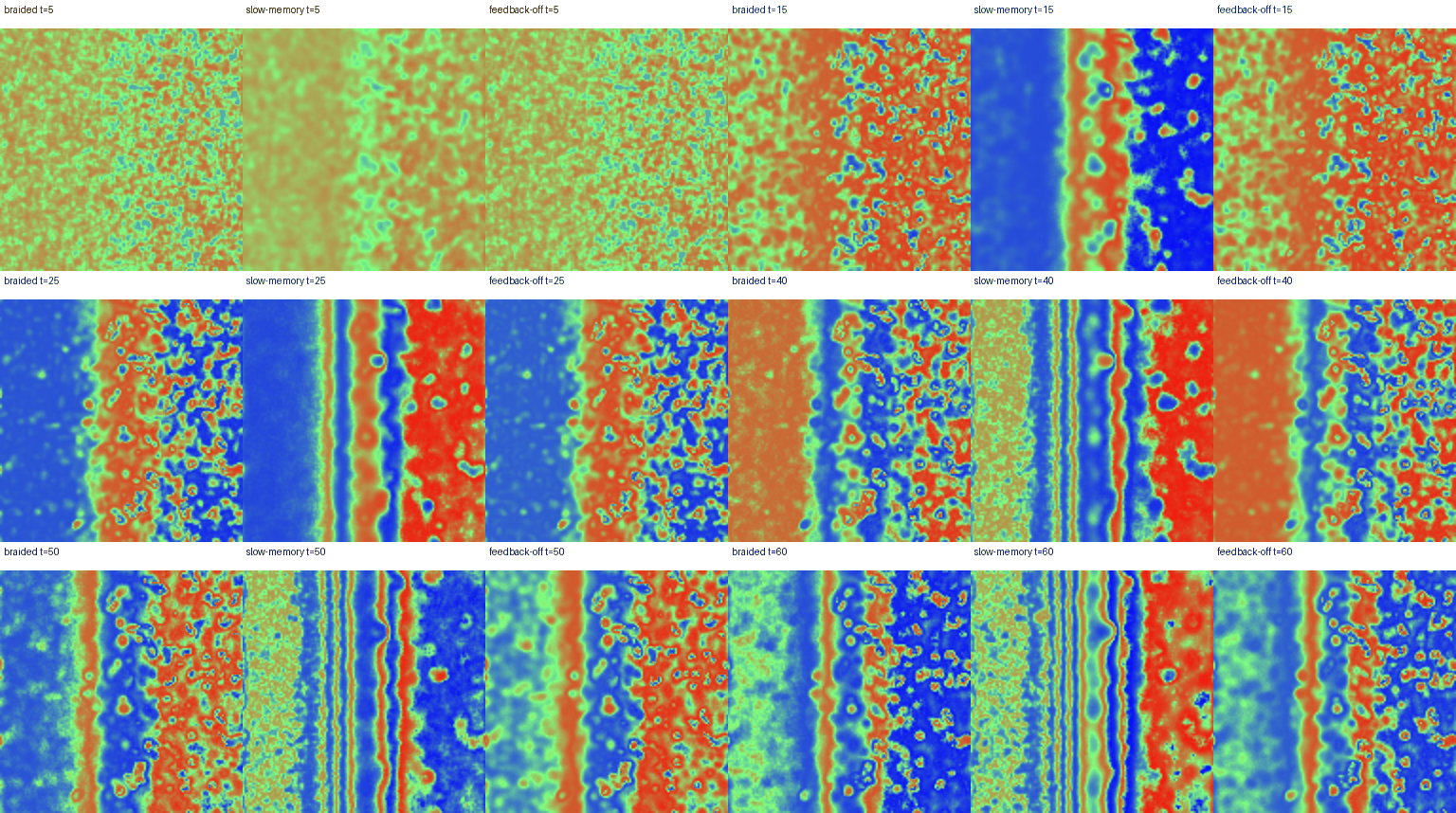
Recorded middle slices through three evolving eight-channel recurrent materials, labeled by composition and simulated time
Left: braided rhythms. Middle: stronger, slower material memory. Right: threshold feedback disabled, with material-dependent transport retained. Twelve recorded middle slices span times 5–60; this is a finite recording, not a live simulation. The photograph above uses a larger 256³ domain, at the same unit cell spacing.
What is happening inside?

Four pairs of recurrent channels have different internal timescales. Neighboring voxels exchange those channels. Positive fast activity converts local nutrient into persistent solid; the opposite part of its cycle erodes solid back into nutrient. Solid changes communication, recurrent thresholds and coupling between fast and slow rhythms.

The recurrence and the two constitutions were designed. The initial feedstock is uniform and the latent state begins with small seeded noise. There are no trained weights, genetic selection, added creatures or procedural surface details in this experiment.

Photograph source and interpretation · Parameters · Julia implementation